
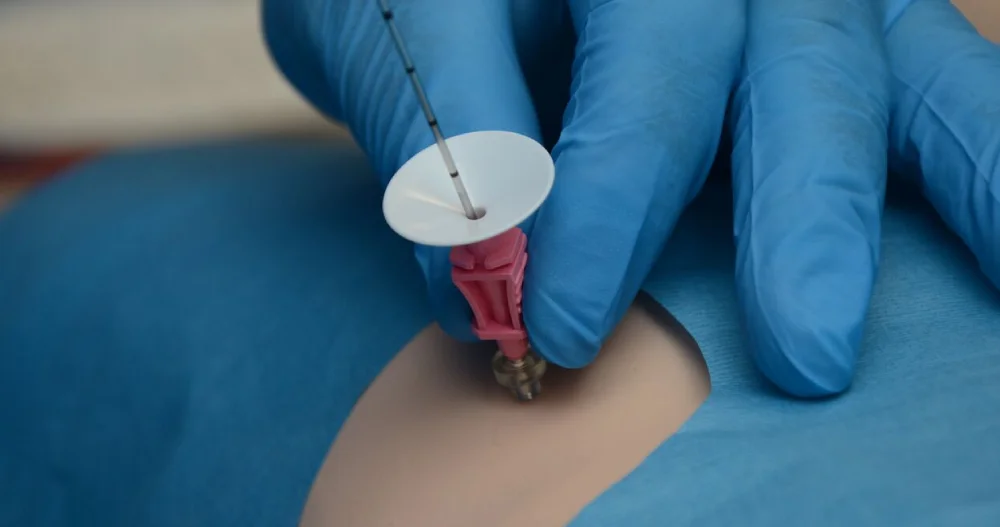
Kidney Biopsy
A kidney biopsy is a medical procedure involving the extraction of a small sample of kidney tissue for microscopic analysis. This test is a crucial diagnostic tool for nephrologists and pathologists, enabling them to determine the specific nature, cause, and severity of kidney disease. The information obtained from a kidney biopsy is often vital for establishing an accurate diagnosis and formulating an effective treatment plan.
Purpose:
- To monitor disease progression over time.
- To evaluate how well a treatment is working.
- To check the health of a transplanted kidney.
- To check the severity or stage of kidney damage.
- To guide treatment plans based on precise diagnosis etc.
What happens during a kidney biopsy?
- Positioning- You will lie on your stomach or side, as this position provides the best access to the kidney. If you have a transplanted kidney, you will lie on your back.
- Numbing the Area- The doctor will clean the skin on your back and inject a local anesthetic to numb the area. You will be awake during the procedure but will not feel pain.
- Guidance- A specialised imaging device, usually an ultrasound and occasionally a CT scan, is employed to accurately locate the kidney and guide the biopsy needle.
All Department
Opening Hours
| Mon - Sat | 9am - 8pm |
| Sunday | Closed |